The complete guide
Real Damascus vs laser-etched: what actually matters
The word "Damascus" sells knives, which is exactly why so many budget sets use it loosely. A genuine Damascus blade is built by folding and forge-welding multiple layers of steel together — traditionally to combine a hard, edge-holding core with tougher outer layers that resist chipping. The pattern you see is a visual side-effect of that structure, revealed by etching or polishing the folded layers.
A laser-etched "Damascus" knife, by contrast, is a single ordinary steel blade with a pattern burned onto the surface for looks. It performs exactly like the plain steel underneath — no toughness benefit, no layered structure — and the etched pattern can dull or wear away with repeated sharpening, since sharpening removes the very surface the pattern lives on.
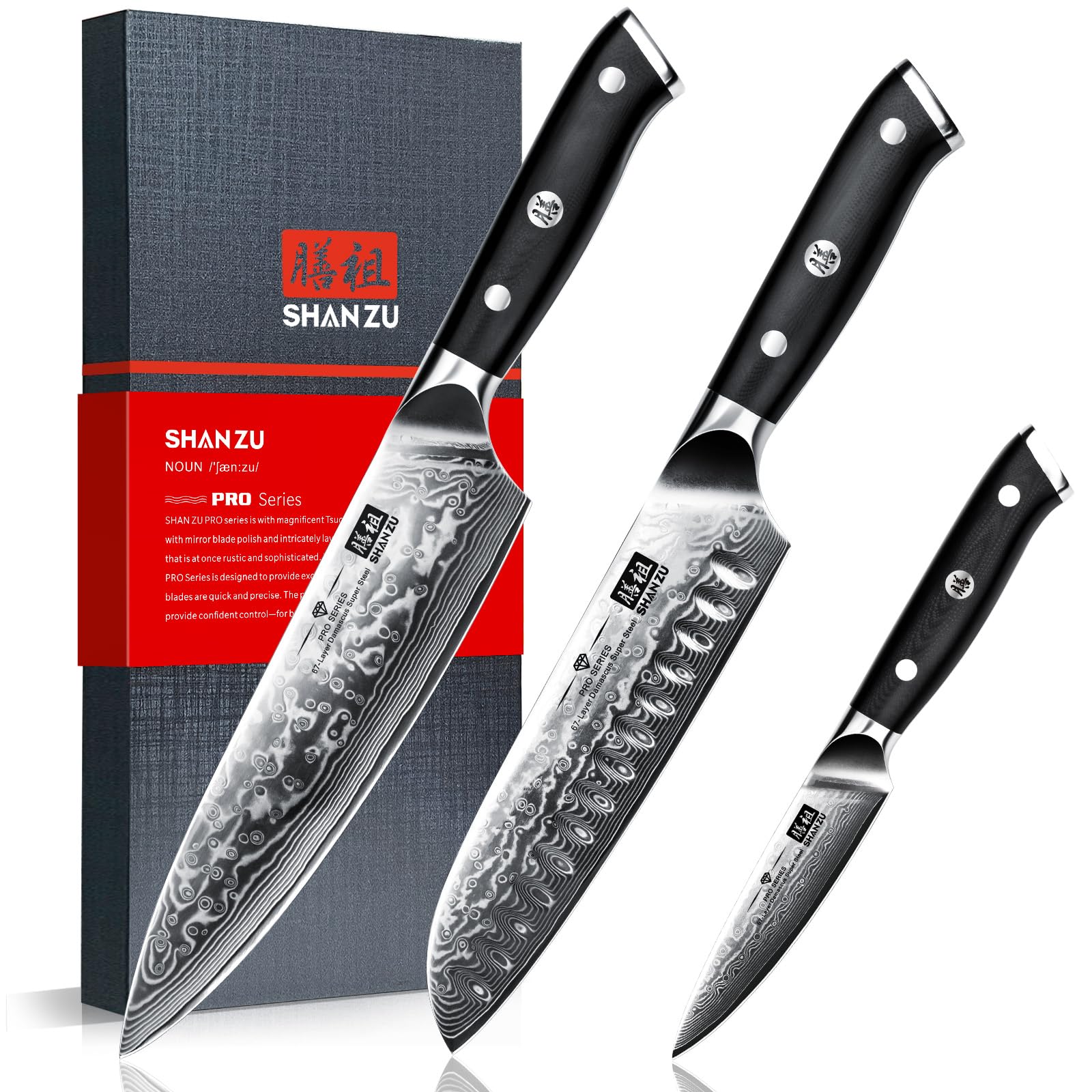
The practical test, if you are shopping elsewhere: ask how many layers the blade is forged from, and whether the pattern is described as etched or as a byproduct of folding. A real Damascus listing, like this set's 67-layer 10Cr15MoV construction, will usually specify both the layer count and the forging process, because that is the actual selling point rather than a finish applied afterward.
Hardness is the other number worth reading. At 62 HRC, this set sits toward the harder end of kitchen knives, which means excellent edge retention but a preference for whetstone sharpening over a cheap pull-through gadget that can chip a hard, brittle edge rather than hone it.