The complete guide
Why edge angle changes how a knife feels
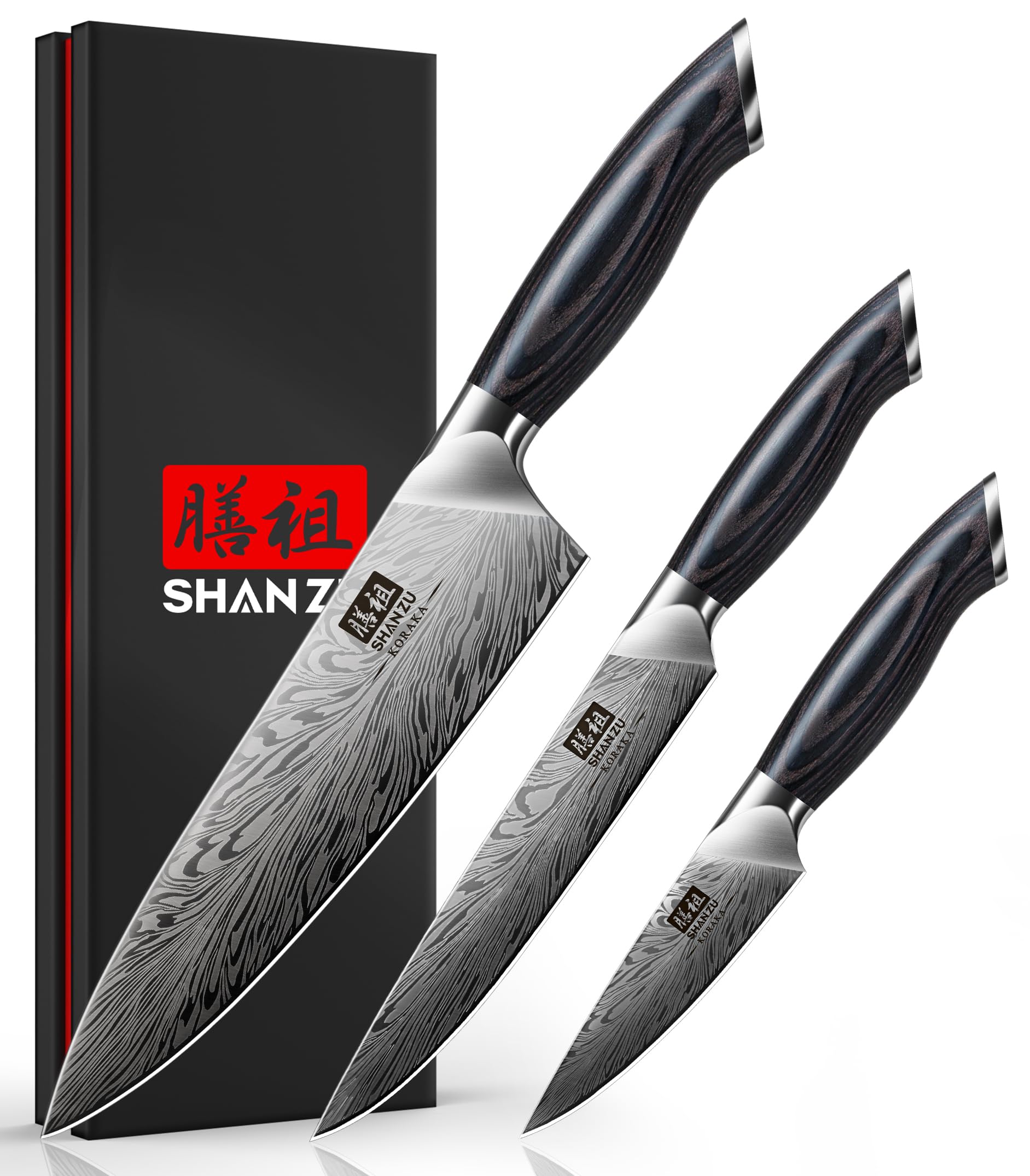
Two knives can share the same steel and hardness rating and still feel completely different to use, because of one number most buyers never check: the edge angle. A wider angle, common on Western knives at 15-20 degrees per side, is tougher and more forgiving of bone contact or a rough cutting board. A narrower angle, like the 12 degrees ground into this set, cuts with less resistance and a cleaner slice, at some cost to durability against hard impacts.
Powder metallurgy steel changes the calculation in the narrower knife's favour. Because the grain structure is finer and more consistent than cast steel, a powder-steel blade can be ground to a narrower angle and hardened further (here, to 63 HRC) without becoming as brittle as a cast-steel blade at the same specs would be. That is the actual engineering reason this set can offer a 12-degree edge where many knives stop at 15.
The practical upshot: use the narrow, hard edge for what it is good at — clean push-cuts through vegetables, meat and fish — and avoid using it on bone, frozen food, or as a makeshift can-opener. A hard, thin edge rewards careful use and punishes abuse more than a softer, thicker one would.