The complete guide
What German forging actually buys you
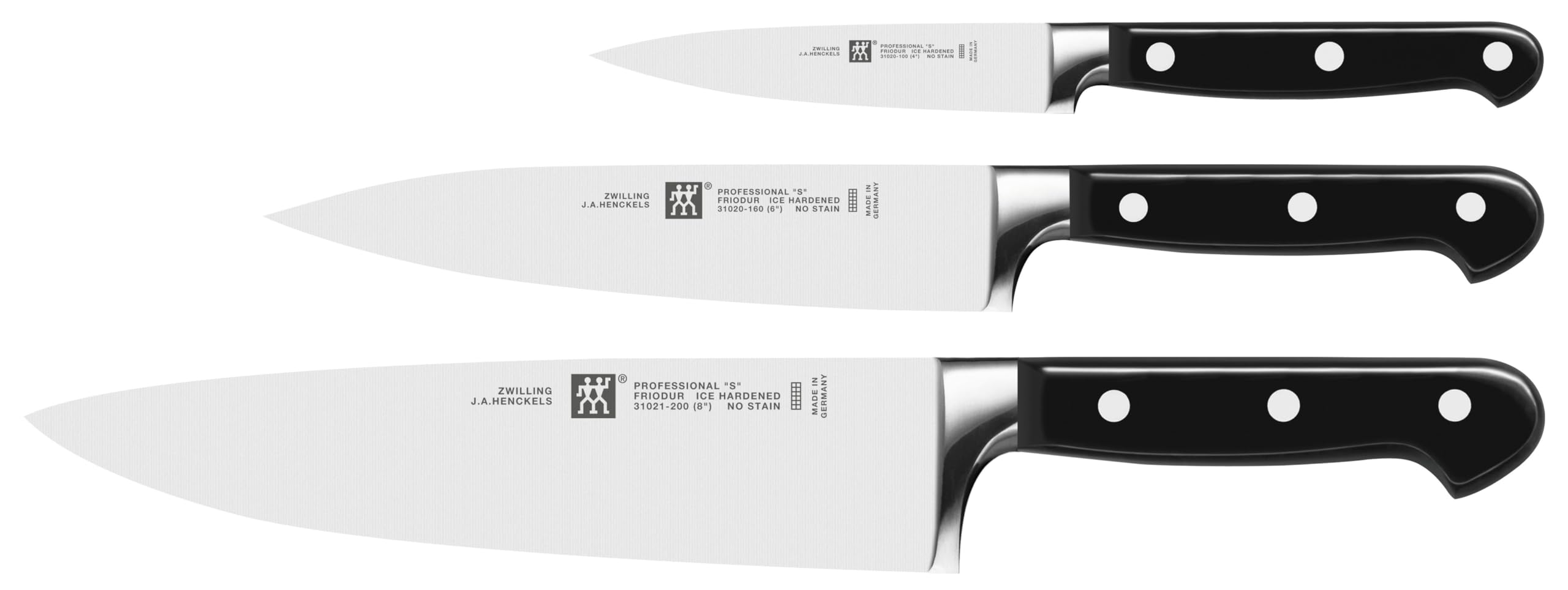
German cutlery's reputation is built on a specific manufacturing choice: forging each blade from one solid piece of steel, rather than assembling a blade and bolster from separate pieces welded together. A single-piece forged blade has no seam to eventually weaken, and typically carries its weight and balance point differently than a bonded blade — most people feel this as the knife "wanting" to fall through a cut rather than needing to be pushed.
FRIODUR, ZWILLING's ice-hardening process, is the other half of the story. Standard steel hardening usually forces a trade-off: harder steel holds an edge longer but becomes more brittle, while softer steel flexes safely but dulls faster. Ice-hardening is a more involved heat treatment aimed at improving edge stability and corrosion resistance without giving up the flexibility that keeps a blade from chipping under normal use.
Whether that difference is worth the price gap over a standard forged or stamped set comes down to how often you cook. For daily use over many years, the reduced fatigue from better balance and the extended interval between sharpenings from better edge retention compound — small daily advantages that add up to real time and effort saved across a decade of cooking, which is the argument for buying once at this level rather than replacing a cheaper set every few years.